
Archive for June, 2009

Seams From The Psalms

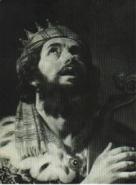
The Book of Psalms may look like a largely disorganized book of Hebrew poems but that’s not really the case. This apparent confusion comes from the fact that the Psalms have many different authors, speak of different situations and are not like historical narrative with a story that flows from chapter to chapter. One of the great things about preaching Psalms as a guest preacher is that I don’t have to spend a lot of time setting up the context. Each Psalm is a fairly self-contained unit of thought.

But that isn’t the whole picture. If you read through the Psalms systematically you’ll come across division markers. The divisions are titled Book I (Psa. 1-41), Book II (Psa. 42-72), Book III (Psa. 73-89), Book IV (Psa. 90-106) and Book V (Psa. 107-150). These are part of the Hebrew text and not modern publisher additions. At the end of each Book, or at each ‘seam’, is a doxological conclusion that appears to have been appended to the Psalm it follows. Also, each Book has some internal unity. Book I is largely composed of Davidic Psalms. Book II tends to use Elohim as God’s name more than it does Yahweh. Book III has fewer Davidic Psalms and more by Asaph. Book IV begins with a Psalm by Moses and he is a prominent character in the Book. Book V is more jubilant and ends the entire collection with celebration. It appears that the editors of the Psalms were careful and thoughtful in what they did. That shouldn’t be a surprise, right?

So I recently finished reading Book III and was struck by its seam. Psalm 89 is the final Psalm of the Book and it is a Psalm of Ethan the Ezrahite. 1Ezrah was a descendant of Judah (1 Chr 4:1, 17) so if this Ethan is a son of that Ezrah then he isn’t the musician mentioned in 1 Chr 15:19 since that Ethan was a Levite. There is an Ethan the Ezrahite who is compared to Solomon in wisdom. (1Ki 4:31) That doesn’t necessarily mean that he was a contemporary of Solomon only that Solomon was wiser than he. It could be like saying that George Washington was wiser than Ronald Regan. They weren’t contemporaries it is just that while both are wise, one is wiser than the other. The first third of the Psalm (1-18) is all about God’s faithfulness. The second third (19-37) is about God’s covenant with David. The final third (38-51) is a lament that God has cast off David. The doxology in verse 52 is very brief, especially compared to the doxology at the end of Book II in Ps 72:18-19.

What got my attention is how Ethan counts on God’s faithfulness even in the face of a broken covenant. David was promised a son on the throne forever but now his crown is in the dust (39) and his throne is cast to the ground (44). And that’s how the Psalm ends and the Book ends. David is cut off. The next book contains three Psalms of David and those are the only mention of his name.

However, the Psalms generally move from sorrow to praise so we shouldn’t be surprised to find that the discussion of the kingship isn’t over with Book III and David’s crown in the dust. The Royal Psalms of Book IV (93 & 95-100) pick up the theme of the king once more and even extend it. The restoration of the kingdom now moves from David to Yahweh himself; “make a joyful noise before the King, the LORD!” (Ps 98:6). These royal Psalms largely relocate our hope and the king to God himself!

And isn’t that what happened in redemptive history? David is the ideal king, Solomon is his mostly successful son but after them the kingdom is divided and the kings wax and wane (ok, mostly wane) in faithfulness till the are exiled by Assyria and Babylon. After the return there is no legitimate king on the throne. When Jesus comes, he is both the son of David and the Son of God. The role of king has moved from David’s failed line to God himself.

1 Ezrah was a descendant of Judah (1 Chr 4:1, 17) so if this Ethan is a son of that Ezrah then he isn’t the musician mentioned in 1 Chr 15:19 since that Ethan was a Levite. There is an Ethan the Ezrahite who is compared to Solomon in wisdom. (1Ki 4:31) That doesn’t necessarily mean that he was a contemporary of Solomon only that Solomon was wiser than he. It could be like saying that George Washington was wiser than Ronald Regan. They weren’t contemporaries it is just that while both are wise, one is wiser than the other.

Painting ‘n Stuff

Painting

I can’t paint or draw. I wish I could and I love it when my wife and daughters do, but I can’t. I took drafting for two years in high school and I think straightedge and ruler is about the extent of my capability in that direction. But I do admire art. A lot. I’ve visited the Getty in LA and the Art Museum here in Chicago and could have spent all day staring at some of the paintings. I have the same problem with poetry. Wish I could do it, love reading it well done, am pathetic on my own.

So I came across a link to an article by Joe Carter at First Things about Thomas Kinkade “Painter of Light™” and I stopped to read. Glad I did. There are many evangelicals who love Kinkade “Painter of Light™” and others who can’t stand his stuff. Here I must admit one of my weaknesses. Years ago I saw some of Kinkade’s “Painter of Light™” stuff and thought it was nice. I didn’t fell compelled to whip out the MasterCard and slap down the big bucks but I was positively disposed to it. I didn’t think too critically about it and it was “Christian” and popular. After I saw more and more of his work I rather soured on it. Just not my kind of work. I think I can be easily initially swayed but I’m glad I don’t give in too easily.

So that brings me to Joe Carter’s piece. At first I thought it would be a slam on Kinkade “Painter of Light™” but you really need to read it. Joe is amazingly fair and critical. I don’t want to give too much away but Kinkade “Painter of Light™” isn’t the hack he is sometime pictured as by his detractors. Joe also, I think, helps vindicate my initial reaction. I hope so anyway.

‘n Stuff

I came across this video last week and really appriciated it. I think classical music is wonderful and wish more people would slow down to listen. When I catch it, I always appriciate Exploring Music with Bill McGlaughlin on NPR because Bill doesn’t look down his nose, pronounce this piece beautiful and make you feel like a dope if you don’t get it. He walks you through what’s going on and explains what you’re hearing.

So anyway, here‘s the video. Take the time to watch all of it, you may find out that you like classical music too!

Sources, Reliable & Otherwise

Read 2 Kings 1-4 the other morning. Some pretty serious prophet action going on there with the passing of the mantle from Elijah to Elisha and Elisha doing some pretty heavy prophet work. He made a poisoned stew safe to eat, parted the river Jordon with Elijah’s robe, provided an endless source of oil for a widow and raised a boy from the dead. It is easy to read that section of Kings and just be blown away by the power of the prophet. And then miss the point of the whole thing.

We should be dazzled by Elisha’s performance here. I mean, it was really impressive! But the role of the prophet, a true prophet anyway, is never to draw attention to himself. So if we’re dazzled by Elisha and we don’t see beyond him we’re missing the point. So, smarty theology nerd, what IS the point of this section then? Well thank you for asking Mr. Head Voice Person! I happened to have spent most of my bus ride the other morning thinking about that very question. Yea. I know. I’m in your head, remember? Shhh. What. Ever.

What I think is going on here is tied to the story that opens the book. Ahaziah, King of Israel fell and was injured. He sends some men to inquire of a Philistine god whether he will live or not. Elijah interrupts the king’s messengers’ journey with the question “Is it because there is no God in Israel that you are going to inquire of Baal-zebub?” You can tell this question is important because it is repeated verbatim two more times in this chapter. The rest of that story is bad news for Ahaziah: he’s toast. But the episode sets up the next few chapters. As we watch Elisha go, we should have the same question echoing in our ears. Is there no God in Israel? Elijah was carried in to heaven by chariots of fire. Is there no God in Israel? The battlefield Israel and Judah drew up in against Moab is flooded when there was no rain and that lead to their ultimate victory. Is there no God in Israel? These miracles are intended to answer Elijah’s question for us.

I think I’m on the right track here because the same basic question is picked up again in chapter 5. Naaman comes to Israel to be cured and Israel’s king thinks he’s being set up by the king of Syria. Elisha tells the king that he will come so that Naaman “may know that there is a prophet in Israel.” (2Ki 5:8) The prophet is supposed to represent God to the people. If there is a prophet in the land, there is God in the land. Prophets don’t operate apart from God.

Now at this point we can click our tongues and wag our heads at those goofy Israelites. They just didn’t get it did they? Perhaps if we were there we’d’ve done better! Well, this is the part where the lesson gets personal. We’re more sophisticated than they were in those days. They had numerous regional gods who supposedly ruled over different territories. If another god seemed more powerful than yours, go make him happy and maybe things’ll go your way. But monotheism has pretty much routed those lesser gods. 1I think this is because of Jesus’ victory on the cross and in his resurrection. Sacrifices in temples were made to demons. (1 Co 10:20) Jesus defeated these lesser things and paraded them in humiliation. (Col 2:15) I think this is why polytheism is not the major world force it once was. Today we see naturalism attempting to put monotheism to flight in a similar manner. So if we can’t run to Baal-zebub for answers, where do we run?

Is it because there is no God in Israel that you are going to inquire of naturalism? Naturalism has the answers. Or most of them anyway. We are the product of our DNA and of our environment. Period. Medical science is picking our DNA apart to explain why we’re fat or thin, healthy or sick, shy or extroverted. Couple that with psychology’s quest to understand how cold parents or intolerant society have molded you to be who you are. Will I succeed? A DNA test and some time with the therapist will reveal all!

I’m not saying that everything naturalism says is wrong; much of what we’ve discovered about creation is right and a lot of it is helpful. The problem comes when we set up a false dichotomy between what is natural and what is supernatural. As if DNA and environment were the only way you got the traits you have. Or if these two processes operate on their own. No, God is the one who caused your DNA to produce a human being. God is the one who mixed your mother’s DNA and environment and your father’s DNA and environment in such a way as to create your DNA and environment. The natural doesn’t operate apart from the supernatural so don’t rush to naturalism for answers to questions about who you are and why you are the way you are. Their answers will be incomplete.

Is it because there is no God in Israel that you are going to inquire of youth? Will I live or die? That was Ahaziah’s question to Baal and judging from the magazines lined up in the supermarket, it is a question we’re asking today. Or consider these lines from Don Henley’s song The End of The Innocence:

For this tired old man that we elected king
Armchair warriors often fail
And we’ve been poisoned by these fairy tales

The line is a slam against Ronald Regan and seems to long for a younger man in office. As if youth means that you’d be a better leader. We live in a culture of celebrity  and young people dominate the world of celebrity. But beyond young people, youth itself seems to hold out so much promise for us. Botox, face lifts, tummy tucks, hair implants, diet fad, all of it promises to keep us in a state of perpetual youth.

A friend of mine from seminary is from Kenya. While he was working on his PhD, he was thrilled to see a few gray hairs appear on the side of his head. In African culture gray hair is a sign of wisdom. You listen to the gray hairs, they’re the ones who’ve been around and they know. Remember, some young kids came out to make fun of Elisha’s bald head and 42 got torn up by bears. The Biblical patter is not to seek out youth but to heed the aged. That is the consistent plea in Proverbs. Youth is not the answer.

Is it because there is no God in Israel that you are going to inquire of technology? Oh, this on hits a little too close to me. I’m a bit of a technology geek so if this has the weakest charges and application you’ll know why.

Moore’s Law states that the number of transistors placed on an circuits will double every two years. That means a huge increase in computing power on a regular basis. So far it has been pretty accurate. And today everything has a computer in it from a greeting cards to toasters to toys. Technology seems to have almost unlimited power and it is everywhere. Surely this is somewhere to turn to answers to our problems and concerns! And the future of technology looks like it is heading toward implants. We’ll be integrating technology into our bodies. Cell phone headsets will be implanted under our skin. We will be instantly connected to the world without having to carry around blocks of plastic and this will improve our lives. Surely technology can deliver.

But can it answer? Doesn’t technology merely echo our thoughts and beliefs back at us? After all, someone programmed it and there is that “ghost in the machine” effect. Technology has no soul, it is ignorant of anything other than what is plugged into it. Unless there is a human behind it it cannot answer us well. And then that depends on the human and so we’re not really much better off.

Again, this isn’t to say that technology is evil. There are many wonderful benefits to smart phones and programmable microwave ovens and computer managed automobile engines.  The danger comes when we think that technology can answer all of our problems. Only God can do that and even the technology we prize is a gift from his hand. When we worship idols of our own fashioning, there is the very real danger we will become just like them. (Ps 115:4-8) It is possible that the internet is making us stupid.

1 I think this is because of Jesus’ victory on the cross and in his resurrection. Sacrifices in temples were made to demons. (1 Co 10:20) Jesus defeated these lesser things and paraded them in humiliation. (Col 2:15) I think this is why polytheism is not the major world force it once was.

Conflict Resolution, Old and New

I’ve been through the little book of Philemon a few times in the past and I’ve heard different teachers draw different principles from it. Fellowship. A Biblical perspective on slavery. Things such as those. This morning when I read it something different caught my attention. It has to do with the nature of the New Covenant.

Philemon is a short, personal letter from Paul to a man named Philemon on behalf of an apparent runaway slave of his named Onesimus who has become a Christian under Paul’s ministry. Paul feels compelled to send Onesimus back to Philemon to right the wrong done. What stood out to me this time through was how Paul does that and what his expectations are. He tells Philemon “though I am bold enough in Christ to command you to do what is required, yet for love’s sake I prefer to appeal to you.” (9) Paul has this expectation that Philemon will choose to do what is right and just “of your own free will.” (14) 1Interesting that my print version of the ESV says “free will” but the on line version says “of your own accord”. Paul doesn’t seem to think that he needs to wield his Apostolic authority to get Philemon to do the right thing. 2Some take Paul’s mention if his authority in verse 9 as a kind of veiled threat. I used to read it that way. I suppose it could be, but I’m kind of doubtful. Threats don’t seem to fit with Paul’s attitude in this letter.  Paul is trusting that Philemon’s heart is such that he will not act as a Roman slaveholder who has been wronged, but as a Christian toward a brother. In short, Paul doesn’t rely on law but on grace.

The nature of the New Covenant is not that there are some, many or most members who are full of the Holy Spirit, but all. (Rom 5:5; 8:14-16) We have all been sealed with the Holy Spirit. (2Co 1:22; Eph 1:13, 4:30) Our hearts have been circumcised. (Rom 2:29, Phil 3:3, Col 2:11) Because of this there is a rather different approach to how wrongs are dealt with than we see in the Old Covenant. Yes, there were cases where grace was exhibited. Joseph and his brothers comes to mind. But there were times when tribes would war over a wrong. I think of how Israel nearly attacked the tribes of Reuben and Gad and the half tribe of Manesseh when they erected an altar of remembrance just after the conquest of the Promised Land in Joshua 22. Or the horrible story of how Israel waged war on the tribe of Benjamin for the atrocity that took place at Gibeah in Judges 19-20.

There are those who prefer to flat line redemptive history so that there really isn’t any difference between the Old and New Covenants. They will stress more of the positive examples from the Old Testament and remind us that there are those in the New Covenant who are covenant breakers likewise. Admittedly, the church was not a state in the New Covenant as Israel was before the Babylonian captivity. That may be but the attitude, approach and method of conflict resolution seem to operate out of very different expectations in the New Covenant.

1 Interesting that my print version of the ESV says “free will” but the on line version says “of your own accord”.
2 Some take Paul’s mention if his authority in verse 9 as a kind of veiled threat. I used to read it that way. I suppose it could be, but I’m kind of doubtful. Threats don’t seem to fit with Paul’s attitude in this letter.

Why Did I Start Running?

I’m coming up on one year of running in a few days and for the past couple of months I’ve been thinking about why I started to begin with. There were a number of reasons but the one that kind of kicked me the most was that I was reading J. Oswald Sanders’ book Spiritual Leadership and he asked “Have you ever broken a bad habit? To lead others, you must master your appetites”. He then suggests:

Why not take on some points of weakness and failure you are aware of and, in cooperation with the Holy Spirit, who is the Spirit of discipline, concentrate on strengthening those areas of weakness and correcting faults.

Seminary was significant and difficult but it was something I had wanted to do for years. What difficult thing had I done that I wasn’t already predisposed to? Not much really. Another thing to mention here is that I noticed many of the spiritual leaders I admired were running. Could there be a connection between physical activity and spiritual maturity?

I was surprised to find the answer to that question on line in a short piece from Men’s Health. The piece is on weight loss tricks but it deals with exercise as well:

3. PRAY THE FAT AWAY

Christian men who report feeling greater intimacy with God through prayer are more likely to be physically active than other men, according to research from Cornell University. “Studies have shown that those who have more social support move more, and being closer to God may give men that support,” says lead researcher Karen Kim. Another possible reason: “General religion in the United States encompasses theological teachings about the body as a temple, which may also lead to the consumption of a healthier diet and increased physical activity,” she adds. Amen to that.

So apparently there IS a connection. How about that?  I was surprised to find this coming from Men’s Health magazine. So much of their content is horrible advice about sex. But I am trying to lose weight and there are some good tips in the article. Plus, it is on line so I don’t have to buy the juvenile sex tips to get the good stuff.

Okay, so what else motivated me to start? A bunch of fairly random things. I watched my daughter run one day and recognized in her easy stride the things I’d been doing wrong in mine. Bunched shoulders.  Tense body. Then I watched as my senior pastor melted pounds off. Every Sunday he was noticeably thinner. Then the Sanders book. My mom dieted and lost a few pounds. A good friend was working to qualify for the Boston Marathon by the age of 50. I had put on weight in seminary that I’d kept saying I would lose but never did. Joe Thorn was blogging on running at the time and pointed me to some good resources for getting started. That’s part of what got me started and once I got going I seemed to be hooked. Right around the anniversary of my first 5k I’ll be running my first half marathon. It is really helpful to see progress.

Jesus\Solomon\Temple

I was just reading Solomon’s prayer of dedication when the temple he built was finished and it reminded me of somethings. I think this post is going to be more of a rambling brain dump than an organize, coherent post. You may want to avert your eyes! :)

So Solomon dedicated the temple and prayed a very important prayer to God, recorded in 1 Kings 8. I can say that this was an important prayer because in chapter 9 God visits Solomon and says “I have heard your prayer and your plea, which you have made before me.” He goes on to promise to heed Solomon’s request if he and the people will walk with him. That is the kind of answer to prayer I think we’d all like to get!

But it was the content of the prayer that snagged my attention. Solomon begins by blessing God (12-21); an appropriate thing to start with. What I thought was neat is that Solomon says to God, “I have indeed built you an exalted house, a place for you to dwell in forever.” (13) So it seems like he expected God to live in the temple. But it was only pagan gods who lived in temples, not Yahweh. Solomon knows this: “But will God indeed dwell on the earth? Behold, heaven and the highest heaven cannot contain you; how much less this house that I have built!” (27) God is not contained in the temple, he is everywhere. I don’t think Solomon is correcting himself here, he is just speaking in broad terms. I mean, he started out by saying that he’d built God an exulted house when it was Hiram who’d done it. (chapter 7). This is just how the author of 1 & 2 Kings speaks. Solomon ordered the work and so Solomon built the house even though it is unlikely he wielded a single tool. The temple is a house for God but God doesn’t live in it exclusively. Same thing.

The other thing that got me thinking was even more significant. A bulk of Solomon’s prayer is taken up with requests that if the people sin and then turn and pray toward the temple that God would hear them. (31-40, 46-50) This is just laden with Christological significance to a theology nerd like me.

Prayer is to be directed to the temple and Solomon asks that God hear it when it is. In chapter 9 when God visits Solomon, he promises “I have heard your prayer and your plea, which you have made before me. I have consecrated this house that you have built, by putting my name there forever. My eyes and my heart will be there for all time.” God will listen! Jesus tells us that anything we pray in his name will be done. (John 14:13, et. al.) Facing the temple and saying a prayer isn’t a magic incantation that will oblige God. Neither is tacking “In Jesus’ name”on at the end of a prayer. To pray toward the temple is more that a compass direction, it is to pray in accordance with the temple, with faith. To pray toward the temple is to have faith that God will meet sinful people there, forgive their sin and hear their prayers. The same thing is true with praying in Jesus’ name. It is to ask in accordance with who he is and what he stands for.

Yea, a bit rambling but I thought the connection was interesting.

The Elder Etherington

Last night the congregation of Lakeland Evangelical Free Church affirmed me as an elder. It is really humbling to me. The group of men who lead our church are godly and wise and I feel like I should just sit silently in their presence and learn. That isn’t what they’ve called me to do but these are some really great men! I feel kind of small but it isn’t me and my natural abilities that fit me for this calling, it is Jesus work in me. Here’s something from Oswald Sanders’ Spiritual Leadership:

Spiritual leadership blends natural and spiritual qualities. Yet even the natural qualities are supernatural gifts, since all good things from from God. Take personality, for instance. [Field Marshall] Montgomery said that “the degree of influence will depenon the personality, the ‘incandescence’ of which he is capable, the flame which burns within, the magnetism which will draw the hearts of others toward him.” Both natural and spiritual qualities reach their greatest effectiveness when employed in the service of God and for His glory.

Yet spiritual leadership transcends the power of personality and all other natural gifts. The personality of the spiritual leader influences others because it is irradiated, penetrated, and empowered by the Spirit, the Spirit’s power flows through him to others.

Spiritual leadership requires superior spiritual power, which can never be generated by the self. There is no such thing as a self-made spiritual leader. A true leader influences others spiritually only because the Spirit works in and through him to a greater degree than in those he leads.

Sobering. Humbling. Empowering.

The Rock (no, not the wrestler/actor!)

In Daniel chapter 2, Nebuchadnezzar had a dream that bothered him a lot. He refused to tell anyone the dream but demanded it be interpreted. He’s the king, he make those kinds of demands I guess. His wise men were confounded. If he would tell them the dream, they’d at least have a shot at an answer! Finally, a Hebrew man who’d been brought into captivity in Babylon from Judah was brought to the king and he told the dream and the meaning. This wasn’t just dream interpretation, it was also prophecy. How could Daniel know the dream, especially with such specificity? Only because God had revealed it to him.

The dream was of a statue made of different kinds of metals and its destruction. It had a gold head, silver chest, bronze midsection, legs of iron and feet of mixed iron and clay. Then a rock came and struck the feet and destroyed the statue. What Daniel explained was that this dream was about coming kingdoms. Nebuchadnezzar was the head of gold. After his kingdom would come three others and then all of them would be blown to dust by one unlike the others. It would be a stone not cut by human hands and it would fill the entire earth.

Previously when I’d studied this I was impressed at how accurate this prophecy was. The Babylonian kingdom was replaced  by the Persians who were replaced by Alexander the Great who was replaced by the Romans. Jesus came during Roman rule and eventually the Roman empire became Christianized. Even the most liberal scholar wouldn’t suppose that Daniel had been written after all of these events and yet it was amazingly accurate as to how the next several hundred years of geopolitics played out. God is sovereign in the affairs of humanity including the establishment and removal of kingdoms!

What occurred to me this morning as I reflected on this was how each of these kingdoms was necessary. Not just so the prophecy would be true, but how each one lead to the ultimate conclusion of the prophecy. Israel (the Northern 10 tribes) had been taken into captivity by the Assyrians and years later Judah, the Southern tribes, were carried away by Babylon. After 70 or so years of captivity and exile, they were returned to the land. But weren’t they spread across two different kingdoms? No. The Assyrian kingdom had been taken over by the Babylonians after Israel’s exile in Assyria and before the Babylonians took Judah into captivity. So the kingdom of Israel that had divided under self-governance while in the Promised Land was reunited in exile under the Babylonians: the head of gold.

But Daniel, after explaining that Nebuchadnezzar was the head of gold went on to say “Another kingdom inferior to you shall arise after you.” The Babylonian kingdom wouldn’t do all that God had in mind. Before the exile God, through Isaiah, had announced that a king who was yet to be born would be named Cyrus and he would return Israel to the land. God raised up the Medes and Persians who took over Babylon’s rule and their king was none other than Cyrus and he returned Israel from exile. That’s what Ezra and Nehemiah are about: the chest of bronze.

At this point, the Biblical narrative ends and we have a gap of about 400 years. We know from world history what happened next and it totally agrees with what is detailed in the book of Daniel. Alexander the Great defeated the Persians in 331BC and rose to global power.  His part in God’s work was to establish a global 1And by ‘global’ I mean regional. The area of concern was ‘the world’ as far as those folks were concerned. lingua franca, or common tongue. Greek became the language of trade and commerce across the entire Mediterranean region. His reign also served to end the regional wars you read about in Samuel, Kings and Chronicles.

After Alexander’s death, the Greek empire was taken over by the Romans. The Roman general Antiochus Epiphanes invaded Israel and desecrated the temple and stirred up the Maccebean Revolt. He was a bad dude to say the least. However, the Romans did do some good in the world. They didn’t throw off everything Greek, instead they kept the Greek gods and kept Greek as the lingua franca. Their assimilation of portions of Greek culture enabled Rome to pike up where Greece left off instead of having to start from scratch.

Rome’s contribution to the world was travel. Rome constructed roads and began securing them. Before that, it was a much more dangerous business traveling between cities. They also began an international system of justice which, of course, favored Roman citizens.

All of these things contributed to the possibility and success of the gospel; that is, the stone that crushed the idol and grew and filled the entire earth. The Babylonians regathered the Jews. The Persians returned them to the land. The Greeks established a common tongue so that the gospel could more easily be preached internationally. The Romans made roads secure which made it possible for the gospel to spread. They also established a form of international justice by which “a company of evildoers encircles”and pierces the hands and feet of the Son of God. (Ps 22) He would be cursed by hanging on a tree (Gal 3:13) and thereby bear our sins (1Pt 2:24).

Each portion of Nebuchadnezzar’s idol made the next portion possible and successful and all made it possible for the gospel to spread and fill the earth. Amazing.

1 And by ‘global’ I mean regional. The area of concern was ‘the world’ as far as those folks were concerned.