Archive for January, 2006

IE 7 ß

So on a whim I downloaded and installed the first public beta of Internet Explorer 7. It seems to have installed some kind of Quartz like video layer or at least turned on anti-aliasing. The screen now looks a lot more like my Powerbook than it used to.

IE7 introduces tabbed browsing. A little late to the game but there it is. There is also a Exposé-like button that puts all the tabs on the same screen so you can see what you have open. It has a built in search bar and RSS feeds (again, a little late to the game).

Overall, it doesn’t make my eyes bleed like IE6 used to. But it is still torturously slow. The screen updates lag pretty severly. When you load my homepage via FireFox or Safari, the rendering engines in those browsers chew it up and spit it out pretty fast. IE6 would take forever and this beta of 7 isn’t much better.

So, I guess my bottom line recommendation: It is still beta, wait till it gets released for real. I will be.

Edit: I will wait till it goes gold before I even consider using it at work on my PC. It is very unlikely that I will replace FireFox with it anytime soon. As in ever.

What is Baptism?

Billy Sunday, revivalist preacher

Later nineteenth-century revivalists stressed the primary importance of public acts: the sinner must repent and witness to their conversion in some public way, such as “walking the aisle” or “coming forward to the altar.” An interesting byproduct of this was that baptism came to be viewed as a means to witness to one’s conversion, especially to nonbelievers. There is little if any biblical warrant for this, but many have come to see witness as the fundamental meaning of baptism.

Gordon T. Smith, Beginning Well, 97

And that is exactly right. The Bible speaks of baptism in many ways (here’s my meditation on one of them) but never as a public witness of one’s faith. I often wondered where that came from and after reading Smith, I felt like I should have slapped my forehead and said, “Yeah. Of course!”

Smith’s book is very good. It is provoking in some ways but it challenges some old assumptions too. I’m reading it slowly and carefully, more carefully than I do other assigned readings. Part of my problem is that I am also reading Victor Hamilton’s Handbook on the Pentateuch at the same time. It likewise is excellent and is causing me to read slowly and reflectively. I am struggling to keep up with my reading but for good reason. It is very good!

David’s Last Words

2Sa 23:1-7 records King David’s last words. Some commentators question whether these are indeed David’s last words since chapter 24 has more of David’s deeds, 1Ki 1 & 2 depict the end of David’s life and in 1Ki 2 he gives his last words to Solomon. Even more, 2Sa 22-24 don’t seem to belong where they are in the book. Chapter 22 (Psa 18 with a few modifications) seems to fit after 2Sa 8 rather than where it is. 2Sa 23:1-7 are David’s last words and it seems like they should end the book. 2Sa 23:8 through the end of the chapter fit more with the end of chapter 20 since both are lists of David’s officers. If we life out chapter 22 and 23, chapter 24 bumps up against the end of chapter 21 and those two fit together also. Both are stories of God’s anger at Israel and its resolution.

So are 22 and 23 insertions? Editorial errors? Redactor clumsiness? I don’t think so. There is no textual evidence that these chapters belong anywhere but where they are. To move them would be to do so without warrant. What we need to do is seek another reason for them being there. They clearly aren’t chronological so is there another reason for the order at the end of 2 Samuel? I think so and I think the author arranged them thematically.

Chapter 21 ends with Israel fighting Philistinian giants. One is even named Goliath. He obviously isn’t the same Goliath that David fought but it interesting that they name is there. As we draw to the end of 2 Samuel the author arrives at this story and his mind is drawn back to the beginning of David’s career. He then launches chapter 22 which is David’s praise of God for his deliverance from all his enemies. Sure, chronologically this psalm may have been penned at the end of the events of chapter 8, but thematically it fits here. David looks back over his life, moving from the youngest of Jesse’s sons tending sheep to the anointed king of Israel. In all of this David praises God for what he’s done on his behalf. Chapter 23:1-7, David’s last words serve as end cap for chapter 21. In his last words he continues the theme of God exalting the humble and humbling the proud.

So when 23:8-39? How does this fit with the theme? Well, David’s last word end with a warning against worthless men. The author then tells us about the excellent men that David had with him. The contrast is supposed to jar us. Yes, David kept Joab around but look at his mighty men also. These were good, solid guys who knew how to handle themselves in a fight.

Then why the story of the census and God’s judgement in chapter 24? This doesn’t seem to fit with the theme at all. Well, I think what the author is doing here really is tied to 22-23. He is warning us that even though we have a good king, we still need to obey God. God can use a good, godly leader as a means of judgement against his people when they are disobedient. Don’t get too comfy just because the right guy is in office.

As I studied this section I consulted commentaries and no one focused the theme of this section. The more liberal commentators just called this section an appendix. The redactors just kind of piled on these stories at the end. The more conservative commentaries acknowledged the problem and then pressed on to interpret each section in isolation. Well, not complete isolation, they did tend to relate chapter 22 with 23:1-7 but that was about it.

What we need to to is ask why the author said what he said, the way he said it in the place that he said it. Sure there may be textual issues but they almost never move large sections of scripture around. It is safe to assume the author knew what he was doing. After all, the author was inspired and the Author definitely knows what He is doing!

The Play’s the Thing

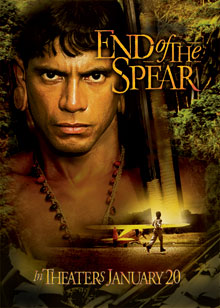
So I came the slow realization that Chad Allen, the actor in End of the Spear who plays Nate and Steve Saint is gay. My response was, “Oh my, evangelicals are going to have a cow!” What I fear is that we as a community are going to rush to eat our young. End of the Spear is an excellent movie that deserves to be seen. Yet I’m sure there will be evangelicals who will refuse to see it because a lead actor is gay.

This tragic knee-jerk reaction will accomplish two things. First, it will prematurely kill the movie’s run in the theaters. This will be tragic because it will reinforce the idea that independent Christian films can’t make money and no one wants to see them. This should not be because this was an excellently made Christian indie film. It deserves attention, positive attention. Second, it will reinforce the notion amongst gay people that Christians hate them. The wall remains in place and the best Christians can do is lob bricks with a fragment of the gospel message attached to them over that wall, largely killing the folks we want to save. Instead, shouldn’t we embrace the positive aspects of this man’s work? He plays a straight, loving father and husband who is willing to give his life so that a vicious tribe can hear the gospel. Isn’t that what we want?

The other problem here is that we once again single out homosexuality as the unpardonable sin. What if we had gotten a man to play the part who was a fornicator? Or a Roman Catholic like James Caviezel? Or a Mormon? Or are we so incredibly parochial that only an evangelical can play in an evangelical movie? What if the key grip is not a believer? Should we boycott the movie for that? In other words, when we make arbitrary rules where do we draw the lines? For that matter, exactly what is an evangelical? Is it TD Jakes or David Jeremiah? Who’s out and who decides that?

Look. Steve Saint and the widows from the story were very involved in making the film and they were cool with Chad Allen playing the lead.Or does this mean that the families the story is about are not evangelical? Please.That should satisfy us. He did an excellent job. His acting was impeccable if his lifestyle is not. We need to not turn this into a literal show stopper. Pray for Chad Allen. See End of the Spear. Praise God for what he did amongst the Waodani Indians. Let’s get our collective head out of your collective belly button.

Gene Veith has some good comments on the subject.

Seems to me that as Hollywood is falling all over itself to love and adore Brokeback Mountain, a film about gay cowboys, they should have a problem condemning this film which features a gay activist actor and presents Christian missionaries in a positive light. This film should present a real moral dilemma for them but critics have pretty much hate it.

End of the Spear

We just saw the film, End of the Spear. This is what Christian film making should be like. The story didn’t focus on the Westerners, it focused on the Waodani people (formerly called the Acka Indians, but that was a term learned from the Waodani’s foes and was an insult.) Steve Saint is not stoic, he wrestles with the death of his father and with reconciling with the man who killed him.

There was so much to love about the film. It wasn’t heavy-handedly Christian. In other words, they didn’t have to speak Christian-eze (or I guess it would be “Evangelicalian”), the fact that they’re missionaries is not pushed, and the reason for them pressing to reach the Waodani was because the military was threatening to invade their territory. Why are these things good in a film? Because if it was couched in all of those Christian tips-of-the-hat, it would play only to Christians. As it is, it is accurate and true and accessible to non-Christians.

From a film point of view, it was beautiful. We spend a lot of time with the Waodani and begin to understand their culture. It wasn’t glamorized at all. Their simple way of living was beautiful but their warrior ways were not tamed down at all. Spearing people was the way of life, it was strength and survival. When Nomi, one of their warriors, converts the rest of the men are amazed that this could happen to a warrior.

There were visual clues to tie characters together across time for us. Children in the jungle carry a parrot and then when we see them again ten years later, the parrot is there. There were great visual clues that kept things and people in order for us us. The filmmakers didn’t treat us like idiots, they help us follow the story without doubting we can. This is an independent film and one Hollywood could learn from. As I said, the brutality of the Waodani was not glossed over but it wasn’t glorified either. It was used appropriately for telling the story.

A great companion to go with this film would be Steve Saint’s talk at last year’s DGM conference. Hearing the story from Steve’s perspective was wonderful. He researched the death of his father and discovered that it couldn’t have happened. The Waodani only attack when they have superior numbers and superior weapons. The knew that the missionaries had guns and they feared guns. They only attack when they have the element of surprise. As the warriors ran across the river one of them tripped and dropped their spears making a very loud noise alerting the missionaries that they were being attacked. As Mincayani (the lead warrior) told Steve Saint about the attack later, he said he didn’t understand why they attacked. Steve determined that if God had not intervened, they would not have attacked. But it was because of the contact and the murder that they tribe was opened to further contact.

Another helpful resource would be the documentary film Beyond the Gates of Splendor. They show a few clips of at during the credits.

Go see this film.

The next story they need to tell is the story of John G. Patton.

Disappointed in Apple. Again.

So the MacWorld Keynote speach is done and over with. We got Intel-based Macs six months early which are faster than light. Big deal. We finally got FM on an iPod. So? We got widescreen DVD on iDVD. Humph. What we didn’t get (other than 24″ and 50″ plasma screens with Bluetooth and Airport) is the iAuto. It was supposed to be the first flying personal vehicle. It was going to cost $1,200 and run on dryer lint and clean the air as it travels and come with a built in iPod, espresso machine and liposuction unit.

Is that asking too much?